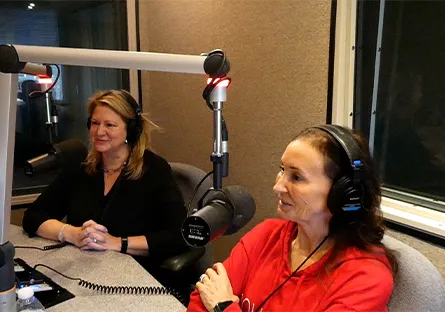
Lisa Hausz, program manager in the City of Tempe’s economic development division and Robin Arredondo-Savage, president and CEO of the Tempe Chamber of Commerce
Check out the latest episode of the Wave Makers podcast!
By Mira Radovich, Senior Contributing Writer
Strong communities are built on strong partnerships—and in Tempe, collaboration between education, business and local government is helping drive economic opportunity across the region.
That was the focus of a recent episode of Rio Salado College’s Wave Makers podcast, where host Michelle Reese sat down with Robin Arredondo-Savage, president and CEO of the Tempe Chamber of Commerce, and Lisa Hausz, a program manager in the economic development division for the City of Tempe.
Together, they discussed how higher education, workforce development and economic development intersect—and why collaboration between these sectors is critical to Tempe’s continued growth.
Education as a foundation for economic growth
Arredondo-Savage emphasized that education plays a central role in helping both existing and prospective businesses succeed.
“Education is essential to the success of our businesses,” Arredondo-Savage said. “When companies look at locating in Tempe, one of the things we continue to hear is that they want to be here because of the skilled workforce.”
Higher education institutions help develop that workforce by offering the training and credentials employers need. Community colleges in particular play a key role by providing flexible and responsive programs that allow students to quickly gain relevant skills.
At the center of that work is workforce development.
“When companies are looking to locate, they look for land, labor and location,” Hausz said. “The labor piece is a key ingredient.”
Tempe is well positioned for continued expansion, she added. Job growth in the region is projected to significantly outpace national averages over the next decade, fueled by industries such as advanced manufacturing, healthcare, technology and construction.
Preparing students for today’s workforce
Both speakers noted that employers are seeking a wide range of skills—from entry-level positions to advanced technical roles. But technical expertise alone isn’t enough.
Arredondo-Savage said employers are also emphasizing the importance of “soft skills,” such as communication, teamwork, relationship building and professional networking.
“These are skills that really help employees succeed once they enter the workforce,” she said.
Programs like the Chamber’s Career Ready initiative are helping address that need by connecting high school students with local businesses.
While early workforce exposure is important, the conversation also highlighted the growing number of adult learners who are returning to school to upskill or change careers.
Many of these students are balancing jobs, families and other responsibilities—making flexible education options essential.
The role of Rio Salado College
Supporting both traditional and adult learners is where Rio Salado College plays a key role.
The college works closely with employers to develop targeted training programs that meet workforce needs.
Hausz highlighted the value of short-term credentials and microcredentials that allow students to gain in-demand skills quickly. Programs in areas such as emerging technologies and advanced manufacturing can help workers enter new fields—or advance within their current careers.
“What I find successful is working directly with employers on what they need and building programs quickly around those needs,” Hausz said.
Arredondo-Savage added that the college’s accessibility and flexibility make it a strong partner for the business community.
“It’s not just the ability to create programs quickly,” she said. “It’s the accessibility that Rio Salado brings to the table.”
Want to hear the whole conversation? Listen now on Podbean or find Wave Makers on your favorite podcast channel: Spotify, Apple Podcasts, YouTube.