100,000 Semiconductor Workers Needed by 2030: Educators Key to Blazing Student Interest
As a teacher in the West Valley, Garth Sommers, knows what he teaches high school students makes a lasting impression.
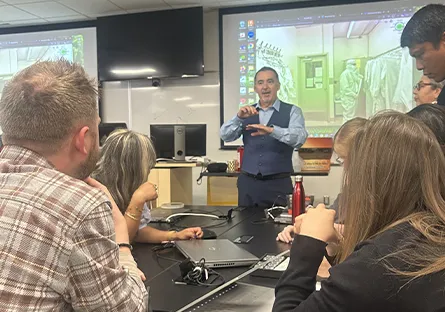
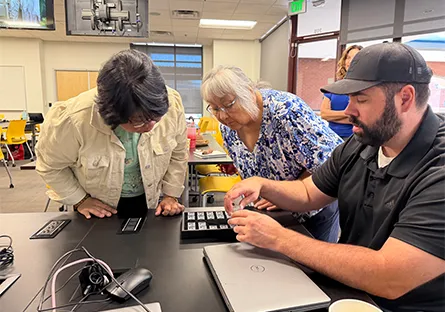
That is why he was one of about a dozen teachers who took part in the 2026 AI and Semiconductor Summer Institute for Educators held at Arizona State University in June.
“As a teacher, the things that I say to students, and how I say it, can have real repercussions on their lives,” Sommers said. “I want to have as clear a picture as possible so that I’m giving them good information that might influence choices they make about their future.”
The five-day program was jointly hosted by Arizona State University and Rio Salado College with support from Intel and the National Science Foundation. It included workshops presented by professionals in the field and education collaborators, such as Dr. Rick Vaughn from Rio Salado. Designed for Arizona STEM educators to help them understand the relationship between AI and semiconductors, received tools to implement what they learned into their curriculum and connect students to the vast types of careers in the field that exist today in Arizona - or are coming tomorrow.
“There is an AI boom going on and Arizona is epicenter of semiconductor development with Intel and TSMC both being here,” said Aviral Shrivastava, a professor of computer science and engineering in the School of Computing and Augmented Intelligence, part of the Ira A. Fulton Schools of Engineering at ASU. “If we want to have an impact it has to be at the school level,” he said.
That means tremendous job growth coming in the future.
What are Semiconductors?
Semiconductors are wafers, often made with silicon, built into smartphones, computers, satellites and medical devices to manage electricity, as both an insulator and a conductor. Arizona is quickly becoming a global hub for semiconductor manufacturing with companies such as TSMC, Intel, and the just announced Australian-based semiconductor packaging company Syenta setting up operations in the state.
“Semiconductors are absolutely vital to our defense, to our economy, to just about everything that we value,” Vaughn told the educators at the event. Vaughn is the faculty chair for STEM initiatives at Rio Salado College.
Building a Semiconductor Education Pathway
With the growth in the field around the state, Rio Salado College, along with Maricopa Community Colleges, the state universities and others, is working to build an educational pathway that begins with K-12 education. It begins with introductory lessons and hands-on instruction during summer camps, high school CTE (career and technical education) programs, and industry-informed career certificate and degree programs. To keep the trajectory going, these institutions collaborate with those closest to the semiconductor technicians, engineers and project managers of the future: their teachers.
For Vaughn, the summer institute was about making that technology stack legible. He wanted educators to leave with more than a buzzword glossary or a stack of slide decks. The objective, he says, was to show how AI, semiconductors and classroom practice are now braided together and why educators need to understand all three.
“Our goal was to connect the dots for teachers — from what a chip actually does to what the career pathways into the industry actually look like — so they could tell that story authentically to their students,” Vaughn said.
The weeklong event included sessions on “decoding the AI economy,” a hands-on AI modeling session, a discussion about careers in the semiconductor fabrication field, a tour at Intel and information from experts in semiconductor packaging.
Beyond the five-day course, teachers were given access to semiconductor education via interactive online media and online courses. Through Rio Salado College, they can explore MNT 112: Introduction to Semiconductor industry, being made available for them to learn about general knowledge of semiconductors, the manufacturing process, nanotechnology, and professional skills that deal with semiconductors. ASU also offers virtual semiconductor field trips with information and videos attached to it.
During one of the program days, Shrivastava asked attendees to think about the semiconductor industry the same way people think about the California Gold Rush. In history books, the miners are often the ones remembered, but many of the people who built lasting wealth were the ones supplying the pickaxes. In today’s AI “gold rush,” Arizona is positioning itself to be one of those suppliers— investing in research, building fabs, and educating educators so they can prepare and teach the workforce of the future.
Story contributor: Allyson Hurtado Fernandez, student intern