This article appears for archival purposes. Any events, programs and/or initiatives mentioned may no longer be applicable.
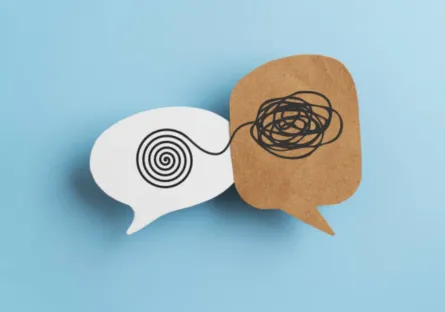
One of the hardest “soft skills” to polish is communication skills. A lot of different aspects go into good communication: physicality, emotional intelligence, perception, social skills, and strong judgment. Knowing what AND how to say something without losing the confidence of the other person can be a real challenge, especially for folks who don’t feel at ease in social interactions. There are steps you can take, however, to give you an edge in communications. Read on as we share these ideas to sharpen your communication skills.
Clarity Is Key
Nothing muddles a conversation like a lack of clarity. Avoid alienating language like professional jargon or esoteric slang. Tailor your speech to match who you’re talking to. Dropping “fifty dollar words” on someone who will not understand them creates an awkward situation where they’ll either feel embarrassed for not knowing the word or will think that you’re trying to “big time” them by flexing your linguistic muscles. Always take your audience into consideration and choose your language carefully.
Lend an Ear
Communication is a two-way process: information is sent by one party and received by another. You can’t be a good communicator if you’re bad at receiving information. In other words: you need to listen as effectively as you talk. It’s hard to maintain a real conversation with someone if you are not fully present as a listener, and it’s also an issue of respect. People are not going to want to talk to you or involve you in conversations if they don’t think you’re listening. It’s one of the most direct and simplest ways of showing respect for another person.
Cultivate your active listening skills. Active listening means to both give someone your full attention and to use your body language, emotional control, and self-awareness to stay engaged in the conversation. An active listener silences their phone and puts it away; they ask questions based on what the other person is saying to encourage them to continue sharing; and most importantly, an active listener isn’t simply waiting for their turn to talk. People can tell when you’re just mentally twiddling your thumbs until they’re done talking so don’t do it.
Open-Ended Questions
Are you having trouble doing small talk? Do you find your conversations stalling out and hitting pockets of dead air? It could be because you’re asking “dead-end questions.” If you’re asking questions that elicit straightforward yes/no answers— questions that don’t offer much wiggle room to the answerer— you’re putting a straitjacket on your conversation. Yes/no style questions can make your conversation feel like an interview or interrogation, which can put the other person ill at ease. To keep things open and engaging, you should ask open-ended questions: questions that ask how someone feels about the subject at hand or what they think is the best thing to do going forward. You can ask what they think it means, which offers a lot of room for the other person to respond. The lack of a straightforward yes/no gives them latitude to go off on a tangent, change the subject, or otherwise provide an unexpected answer. It’s hard to build off of a one-word response; the open-ended question gives YOU- the questioner- a lot to work with.
Be Mindful of Body Language
To paraphrase the great poet Olivia Newton-John: let us hear your body talk. Nonverbal cues make up a surprisingly large part of our interpersonal communications. Your posture, how you carry yourself, the way you gesticulate, how much physical space you take up, the distance between your body and the other person’s, how long (or how little) you maintain eye contact, your facial expressions: all of these things feed into a conversation and influence it. If one element is wrong, it can throw the whole thing out of whack. It doesn’t matter how friendly and cooperative you’re being if you’re talking a little too close to them for comfort; that sustained eye contact may be an attempt to show them you’re present and engaged with them, but maybe they view it as domineering or hostile behavior.
To improve your body language, you have to be aware of how you come across to others. Talk to friends and co-workers whose insights you’d trust. Do mock interviews with them. Ask them to tell you how you come across, and specifically ask them to guess your mood based on your body language. You may be surprised that while you feel one thing internally you’re projecting something very different externally.
Remember: communication cuts both ways. Be mindful of THEIR body language. Do they look uncomfortable or ill at ease? Do they seem closed off? Are they actively avoiding eye contact? Don’t jump to conclusions about how they’re presenting themselves but keep track of that information. If they seem nervous, it may be a good idea to do an icebreaker.
The Eyes Have It
On a related note: eye contact is very important. It can be uncomfortable to do because of how intimate and vulnerable it feels but that is exactly why it is so effective. Making eye contact with others reads as confident; it reads that you have nothing to hide. A person who is being secretive or evasive will often avoid making eye contact, so not doing it could make you look suspicious. The trick is not to overdo it: you don’t want to STARE at people. Think of eye contact as a check-in, something that you do every now and then throughout the conversation to show that you’re present.
If you have difficulty doing eye contact, there are two tricks you can employ to get better at it. The first is to practice on yourself. Look in the mirror and try to maintain eye contact with yourself; it’s harder than it sounds! The other trick is to find a “focal point” (an object or landscape feature) that is within your immediate line of sight while you’re talking to someone. The focal point could be a fire hydrant on the wall or a nearby door or a chair or piece of art; it doesn’t matter. The important criteria here is that the object is close to the person and at around the same height as them. When you want to maintain eye contact, look at the focal point. To the other person, it will look like you’re looking at them and not the thing behind them. This is most effective when doing public presentations or talking to a larger group of people.
Another option is to focus your attention on a different feature on their face: nose, earlobe, cheek, the point where their eyebrows meet.
Article by Austin Brietta
Read About Wellness
Check out more of our Wellness and Student Success stories: