This article appears for archival purposes. Any events, programs and/or initiatives mentioned may no longer be applicable.
Ever miss throwing a ball into a hoop? Had someone shout “CATCH” at you and felt something whizz past, just out of reach? Missed the step on a staircase and had to catch yourself on the railing? In each of these cases, hand-eye coordination is the deciding factor between success and failure. Hand-eye coordination involves the speed and efficiency in which your vision and hands can work together, sometimes in tandem, to succeed in athletics and other everyday activities. The better your coordination, the faster and more accurately you can react to activities like catching falling objects, hitting an object from a distance, and more.
Why It’s Important
Developing strong hand-eye coordination can help improve your ability to carry out a wide variety of simple and complex tasks. Most forms of exercise and sports involve coordination, as does playing video games, driving a car, typing or writing, swimming, climbing, using electronics like card readers, dancing, sewing, and visual arts. Hand-eye coordination also affects your sense of balance; better balance can help safeguard you from falls and injuries, stabilize your joints, and improve your posture.
One of the main areas that hand-eye coordination impacts is your reflexes. Your response time to sudden stimuli like a car suddenly veering into your lane or a ball flying toward your face is influenced by hand-eye coordination. The better your coordination, the faster information is processed and passed from the eyes to your hands, giving you the ability to gauge the closeness of nearby objects, their speed, and whether you need to get away from them or reach for them. Think of how many accidents you’ve avoided in your life just by seeing disaster coming in a matter of seconds and having the reflexes to get out of its way in time. You have your hand-eye coordination to thank for that.
How to Improve Hand-Eye Coordination
The good news is that improving your hand-eye coordination isn’t complicated, expensive, or too arduous. The key is repetition. Doing activities that call for hand-eye coordination on a consistent basis can sharpen those reflexes over time. It doesn't have to even be for a long period of time: 5 to 10 minutes of focused time for two to three days a week can have a positive impact on your coordination.
Activities that can sharpen your coordination include:
- Wall bounce: This practice helps hone your ability to visually track objects. Hurl a ball against a wall and catch the rebound.
- Juggling: Juggling two to three balls isn’t just good for your coordination; it encourages an increase in neuroplasticity in the brain, which can improve memory retention, information processing, and motor function.
- Drawing: A fun way to hone your hand-eye coordination is to pick up a pencil, pen, or brush and make some art. Doodling and sketching are great ways to give your coordination a workout.
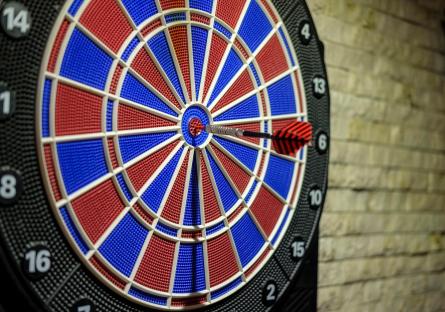
- Darts: The next time you’re at a bar with a dartboard, take some time to throw a few darts. Dart-throwing and other kinds of target-based activities (including skeet-shooting and even batting cages) can help improve your aim and reflexes.
- Racket sports: One of the most rewarding and intensive spots for coordination, racket sports like tennis, racquetball, badminton, and pickelball train your eye to always be on the ball while your body races to keep up with the game.
- Martial arts: Martial art systems like aikido and tai chi that heavily emphasize movement can help you cultivate sharper hand-eye coordination over time.
Keep an Eye on Your Vision
There isn't much point in tightening up your hand-eye coordination if you neglect your eye health. Make sure to get a vision test if you haven't done one in awhile. Visually impaired conditions like macular degeneration and glaucoma can present for a while without displaying noticeable symptoms, so it's important to get a comprehensive vision test every few years. You also want to make sure you get plenty of vitamin A, C, E, B, zinc, copper, and selenium in your diet as these nutrients play a role in maintaining eye health.
It’s also important to stay well-hydrated and get an adequate amount of sleep every day, as sleep deprivation and dehydration can also negatively affect your vision.
Article by Austin Brietta
Want more wellness tips? Check out these stories: