Going to school is about self improvement and discovery. You learn new things, acquire skills and knowledge that will make a more well-rounded and employable person. You enroll as a piece of lumpy iron and through your own grit, determination, and accomplishments hammer yourself into steel by graduation day. So now what? You’ve got the degree (or you’re about to); how do you get the job? How do you monkey branch from the tree of knowledge to the tree that will nourish you with the fruits of your labor?
"Don't wait until graduation– or your last month of classes– to start your job search," said Rio Salado College's Career Services Supervisor John Bastian. "During your entire time in college you can be taking steps to build your skills and position yourself for your career of interest."
Making the transition from student to seasoned professional isn’t always smooth, but if you follow these steps and keep these tips in mind you can stick the landing as you jump into your career.
Your College Can Help
School isn’t just a place for learning the skills you’ll need to succeed as a professional; it’s also a place that offers resources and opportunities for connections that can help get you into your career. Most community colleges and universities offer some kind of career counseling. Career counselors can help give you guidance that can polish up your resume and cover letters, sharpen your job hunting and interview skills, and point you to resources that could help you find networking opportunities.
Colleges can also be a way to find a mentor. Check out your network on LinkedIn to see if someone in your field is an alumni and reach out to them. Don’t sleep on student life groups, either. Social clubs, honor societies, and community events can also be a way to network and connect with people who could help you down the line.
Many colleges also offer pathway programs, which are specialized curricula designed for certain industries and businesses to train and upskill workers to enter the workforce. There are also microcredentials and certifications that are career-relevant that can be completed in a much shorter time frame than a degree. Getting one of these certifications or microcredentials done while you work toward a larger program can be a great way to add some meat on your resume and make you a more viable candidate.
Consider an Internship
A good way to transition from student to professional is to take on an internship. An internship gives you the opportunity to “try before you buy,” giving you some time to shadow professionals in your chosen field, get a feel for the work culture, and maybe even get some hands-on job experience. Internships can be a very effective way to network and ingratiate yourself with potential mentors and future employers. It can also be a reality check: you may find through the course of your internship that you don’t actually like the work itself. This can give you a chance to pivot and pursue a different career path instead of over-committing to something that won’t satisfy you.
The downside to internships is that oftentimes they don’t pay. While some DO pay, many internships are pro bono. For some people, devoting 10+ hours a week to unpaid labor is simply not feasible. Before diving into an internship, consider the ROI. Are the opportunities and experiences this internship could provide for you worth the time investment? Would those internship hours be better spent working a job that pays or taking additional classes? This is where having a mentor and networking can come in handy. Talk to people who’ve had experience doing internships and hear what they got out of it.
Polish Your Resume
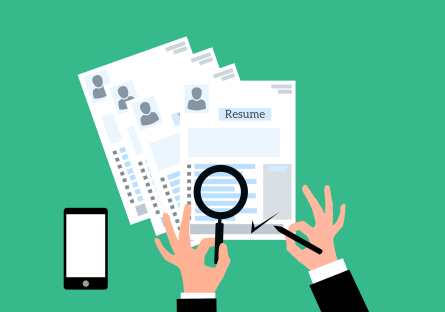
When you’re ready to job hunt, you need the proper tools for the job. That means having a well-crafted, grammatically impeccable, easy-on-the-eyes formatted, and RELEVANT resume. By relevant, we mean that the resume you’ve written is applicable toward the job you’re applying for. Highlight skills and past work experiences that would make you a good fit for THIS job. Resist the temptation to bloat your resume by putting down every job you’ve ever had on your resume. You want to keep the resume succinct and to the point; it should never be longer than two pages.
"Tailor your efforts to specific jobs and specific job descriptions,” said Bastian. “In other words, find those jobs you are interested in and let the job description be your guide. Your resume and cover letter should address how you fulfill the requirements and expectations listed on the job description."
A crucial part of good resume writing is using the right keywords. Many businesses use AI now to prescreen resumes. Keywords can flag their attention, either pushing up or down the digital stack. To get a good idea what the right keywords are, look at the job posting and read the description copy carefully. What specific words do they use? What skills and experience do they ask for? Those are the words you want to make sure appear on your resume in some form.
Speaking of AI: while it may be tempting to have AI do the work for you, be careful. Generating a resume can be tricky. AI can often make errors and may hallucinate job experience or references that don’t exist.. They can also write in a very dry and generic way, which can be bad for the brief parts of the resume (like your about/mission statement) where you have a chance to show some personality. If you do use AI to help you write your resume, read its output very, very carefully and rewrite the results to showcase more of your personality.
"AI is only a tool,” Bastian said. “If you let it run your efforts, you likely will not find success. Your voice– not AI– should come through strongly in your resume, cover letter, and interview."
Maintain a Professional Online Presence
The separation between our digital and physical worlds gets thinner and more porous by the year. Oftentimes we find most of our job opportunities online; sometimes, they find us in the form of recruiters and hiring managers reaching out because they saw your resume or work online. Everyone who you interact with online and who sees your social media accounts and posts could be someone who could connect you to a job or prevent you from getting one if your digital footprint is putting the wrong foot forward. When you apply to a place and are considered a viable candidate, they may research you and see how you present yourself online. This is why maintaining a professional online presence is essential.
Try this experiment: open an incognito window and type your name into a search engine; if you have a fairly common name, be sure to add in some additional details like location, user names, or business to your search to make sure you get good results. Look over the results with an objective eye and ask yourself: does your online presence look professional? Would YOU hire yourself based on what you’re seeing? It can also be helpful to have a friend or mentor do this with you—they may catch potential red flags that you’ll miss.
"Make sure you are a person who reflects the values of someone the company/organization wants to hire,” said Bastian.
If your online presence could use some TLC, there are two approaches to take. You can do some judicious pruning and clean up your online presence by removing unprofessional photos and hiding or deleting posts that could be risque or controversial in nature (like politics or bawdy humor). Alternatively, you can lock down your socials by updating your privacy settings. Keep in mind that each social networking site handles privacy settings differently; some places may allow friends to share your private posts, for example, which would make them still visible even after you update your privacy preferences. Either strategy has its pros and cons. With selective editing, you run the risk of missing something; locked accounts could make it seem like you’re hiding something.
Promote Yourself
Your online presence doesn’t have to be a work liability: it can be optimized as a tool for self-promotion and networking. Set up professional social media accounts that are separate from your personal ones. Make sure that there’s contact information for you on these accounts. One classic mistake people make is building portfolios and web pages for themselves but not including any contact form or email on them. If someone who could offer you work sees your presence online and finds it compelling, don’t make them have to work to reach out to you. Make it as easy as possible for them to message you.
Friend the people you meet at networking events and follow their socials. Comment on posts they make and share their work. Like most social interactions, sincerity goes a long way online so don’t comment on or like everything they do; engage with the stuff you find genuinely interesting. Share articles about the industry you want to enter. Consider writing blogs sharing your thoughts about the work you want to do or are currently doing.
Another thing that can be really important is a good photograph. A professional head shot can be the special sauce that makes your online presence pop. Good photography is very much a “you get what you pay for” activity, so don’t cheap out or do it yourself unless you’ve got a really good eye and great gear. Please note that while it’s good to have a strong head shot for your online presence, you shouldn’t include it in your actual resume unless it’s specifically requested.
Article by Austin Brietta
Career Corner
Looking for more of our career stories? Check out these blogs: