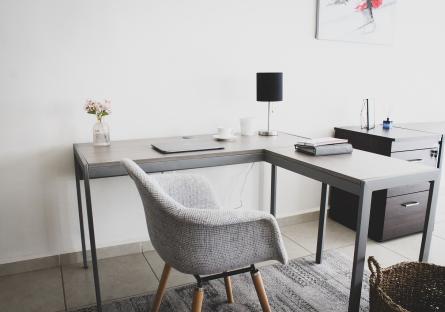
For those who are able to work from home, there are a lot of upsides to remote work. For starters: no commute! You don’t have to rush out the door to get to work on time. Feeling hungry or thirsty? Your fridge is right there, and you don’t have to worry about any of your co-workers eating your stuff even though the lunch bag clearly has your name written on it. It can be sweet but there’s also a sour side to working from home: it can start to feel like you’re always “on” when your home is also your office. How do we keep these two modes of being separate? What can we do to keep working from home without home feeling like work?
Make Space
If you’re going to spend a lot of time working from home, you need to set up a dedicated work area. Having a home office- be it a full room or even just a table you work from- helps create a sense of separation between your home life and work life. The ideal home work space is one that is free of distractions, so find a place in your home with the least amount of “foot traffic” from anyone who lives with you. This includes avoiding working in a shared space;, so don’t work out of your living room if you have roommates or family.
Don’t have any screens nearby that aren’t work related. A work space should be relatively quiet, so pick a place with good acoustics (this will also come in handy during virtual meetings: the quieter the room, the less ambient noise picked up by your mic!). Good lighting is also very important so you’re not straining your eyes. Make sure your furniture is supportive, as well; remote work tends to be sedentary, so you want to have an ergonomic chair and other fixtures to keep you comfortable and reduce the risk of developing any injuries.
Clock In, Clock Out
In theatre stage curtains are often used as a way to cleanly demarcate when a show is starting and ending. Reality as the audience knows it “ends” when the curtain rises. This visual cue helps transition people from a casual mode of engagement to something more focused. It’s important to have “curtains” for your home work space to help you separate home time from work time. Instead of a physical curtain, though, it’s some kind of ritual or activity you do every time you work at home. The purpose of this routine is to help ease you into a professional mindstate; since you can’t go to the office while working at home, you have to find other ways of feeling like you’re leaving your everyday life behind for a while.
A “curtain” for your home work day could be as simple as opening or closing a window, listening to a certain piece of music, fixing your morning coffee, updating your to-do list, a quick exercise routine, or playing with a pet before “clocking in” for the day. The key is consistency: do the same thing every time you’re about to go to your home office.
It’s also important to “drop the curtain” when your work day is done. Give yourself a quick activity you do to celebrate and mark the end of your work day. Maybe it’s a quick snack or a walk outside. Perhaps it’s a repeat of the routine you do to start your work day. Again, what you do isn’t as important as making sure whatever you do you do it consistently.
Set and Enforce Boundaries
One of the biggest pitfalls of remote work is that it can blur the line between your home and work life. While commuting to work every day has its downsides, the upside is that when your work day is done you can leave it all behind at the office. Working from home makes that firm separation harder to maintain. That’s why it’s critical to set boundaries and stick to them to have a healthy work-life balance.
A simple way to keep your work and home life separate is to make sure that when you log off you’re OFF. Don’t check your work email after hours. Don’t answer work calls or texts off the clock. While emergencies can happen and there may be moments where it’s reasonable for your work to contact you after hours, you need to be clear and direct with your supervisor and coworkers that you won’t respond to non-emergencies until you’re on again.
If you feel like you’re “not being a team player” by being unavailable in your down time, keep this in mind: when you make yourself available 24/7, that creates an expectation that the rest of your time will also be on call all the time. If your supervisor feels it’s fair to email or call you off the clock with the expectation of an immediate response, what’s to stop them from doing the same to your co-workers? Model the kind of culture you want to be a part of. That also means you need to show the same consideration to the rest of the team, so don’t email or text them after hours about anything that can’t wait until the next business day.
The other thing to keep in mind is that having uninterrupted personal time is vitally important to keep you from getting burned out. Burnout can derail your productivity and wreak havoc on your mental and physical health. Studies show that workers who continue to deal with work issues after hours experience higher rates of anxiety, poorer quality sleep, and lower levels of personal relationship satisfaction.
Office Hours
When it comes to working from home, setting boundaries to keep home life out of work life is also very important. If you live with family or roommates, let them know what your at-home office hours are. This is your “do not disturb” time; be firm about prioritizing these office hours and let your loved ones know to only contact you in case of an emergency. Set your phone to silent and log off social media so you won’t be tempted to kill time on there during your work day. Fulfill any obligations you have before you clock in: take the kids to school, walk and play with your dog, water your plants, and so on. Clear any distractions off your plate so that you can lock in and stay focused until your next break.
Part of the reason why you want to maintain this strict schedule is to cut down on multitasking. If you’re getting called away to handle home responsibilities in the middle of work, it’ll be hard to get back in the flow of things. Trying to do two things at once is counterproductive and almost certainly will end you with doing a few things badly instead of one thing very well.
Save Your Toughest Climbing for Your Peaks
We all have times during the day where we’re more productive than we usually are. Our energy levels are higher, our ability to concentrate is sharper, our cognition is firing on all cylinders. That time of day is different for everyone: some of us are at our peak in the morning hours, while for others they don’t hit their zenith until the afternoon. Studies show that humans tend to only be productive for 3-4 hours a day before our focus starts to wane and our ability to process information and retain it diminishes. This is why it’s important to know when you hit your daily peak so you can do your most intensive, demanding work during that time frame. Save the low effort stuff when you’re climbing down from your mental peak.
Take Breaks
Taking short breaks throughout the day helps keep your mind and body fresh. Once an hour, step away for a couple of minutes to do a quick stretch, grab a drink, or short exercise. Got dishes piling up? Use your short break to scrub a few of them. The key is to take your mind wholly off work for 3-5 minutes and get your body moving. Breaks are important for relieving stress and recharging our mental energy so we can refocus our efforts without burning out. If you hit a wall during your work day and feel like you can’t think your way out of a corner you’re stuck in, step away for a couple of minutes, take a few deep breaths, stretch yourself, and give it another shot.
Article by Austin Brietta
Career Corner
Looking for more tips and information to help you excel in your career? Check out a few of our career stories: