By Mira Radovich, Senior Contributing Writer
How do you measure skills like critical thinking, ethical decision-making, and effective communication— qualities that employers consistently rank among the most valuable in today's workforce?
Rio Salado College is helping answer that question through a new partnership with Axim Collaborative, a nonprofit organization dedicated to expanding access to high-quality digital learning.
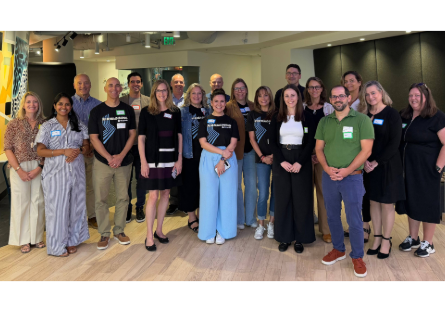
Supported by grant funding, the 18-month initiative brings together Rio Salado, Western Governors University, Lorain County Community College, and Miami Dade College to explore how artificial intelligence can transform the way colleges assess student learning.
The project, “Building Dynamic, Career-Connected Assessments in the Age of AI,” will focus on developing AI-enabled assessments that move beyond traditional tests and memorization to evaluate real-world problem-solving and applied skills.
Participating colleges will test new assessment models focusing on the skills that employers value most. These tools will help students better understand their strengths, identify areas for improvement, and receive feedback they can use to continue developing their skills.
For students— particularly working adults and first-generation learners— the goal is simple: create learning experiences that demonstrate not only what they've completed, but what they are prepared to do in their careers.
At Rio Salado, faculty members from communications, educator preparation, and public health are exploring ways to integrate AI into coursework, giving students opportunities to practice professional skills in realistic settings before they enter the workforce.
Building Communication Skills Through AI Coaching
In Rio's communications program, faculty are exploring the use of an AI coach that can provide students with immediate feedback on their self-recorded presentations and speeches.
Rather than waiting for a final grade, students would receive guidance on areas such as delivery, organization, and vocal presence, allowing them to revise and improve their work before submitting it.
"Legacy assessments were built for a world that no longer exists,” said Dr. Julie Cober, faculty chair of communication. “We must shift toward measuring authentic skill demonstration and AI literacy rather than static products that AI shortcuts can easily replicate."
Cober believes the long-term impact extends far beyond a single course.
"By building interoperable, open-source infrastructure, we hope to create a skills-first learning ecosystem where student mastery is demonstrated through dynamic, verifiable assessments that are trusted by employers and transferable across institutions," she said.
Preparing Future Teachers for Real-World Conversations
In Rio Salado's educator preparation program, faculty are designing simulations that allow teacher candidates to practice challenging conversations they will encounter in the classroom, such as parent-teacher conferences and discussions about student progress.
An AI-powered tool could take on the role of a concerned parent, giving students a safe environment to strengthen their communication skills and navigate difficult situations before entering student teaching placements.
"I'm excited about this project because it prepares teacher candidates with job-embedded skills in communication and ethical decision-making before they enter the classroom," said Dr. Jennifer Gresko, faculty chair of educator preparation. "These skills are fundamental to effective teaching, yet they are often developed through experience rather than intentionally taught."
Gresko envisions AI becoming a standard component of teacher preparation programs.
"Teacher preparation programs will be able to intentionally cultivate these skills by practicing with artificial intelligence before participating in authentic field experiences and student teaching," she said.
Supporting Future Health Care Professionals
In the health sciences programs, Rio faculty are exploring how AI simulations can help students practice patient interactions, clinical reasoning, and culturally responsive communication.
Potential scenarios include conversations with patients, ethical dilemmas, and opportunities to strengthen decision-making skills in a supportive environment.
"This project will help health sciences students develop essential workforce skills in communication, clinical reasoning and ethical decision-making before they enter professional practice," said Beth Siwek, faculty chair of health sciences. "Health care employers increasingly need graduates who can communicate effectively, think critically and respond confidently to diverse patient needs in rapidly changing clinical settings."
Looking ahead, Siwek believes AI will become an essential tool in preparing future health care professionals.
"By intentionally developing communication, cultural responsiveness and critical thinking alongside technical knowledge, this work can help prepare a more confident, adaptable and workforce-ready generation of health care professionals," she said.
As artificial intelligence continues to reshape education and the workplace, Rio Salado's partnership with Axim Collaborative represents an opportunity to reimagine how colleges measure learning and prepare students for success.
To learn more about the partnership, visit Axim Collaborative's Assessments in the Age of AI page.