There’s an African proverb about the importance of storytelling that goes, “until the lion learns to write, the story will always glorify the hunter.” So much of our lives, both as individuals and as social creatures relating to each other, are shaped by narratives. Being able to tell YOUR story- to express what the world looks like through your eyes- is an essential part of living in a free and equitable society. It's why storytelling played an important role in the Civil Rights movement, as African-Americans who had experienced oppression and bigotry for so long took control of the greater social narrative and said, "this is what it's like to live in this country as a Black person."
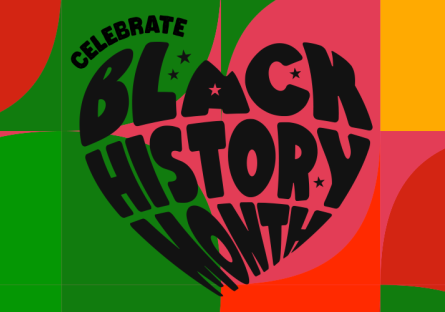
On Thursday, Feb. 12, Rio Salado College celebrated the importance of storytelling as both a vehicle for personal expression and social justice at our Black History Month event, The Power of Storytelling. An in-person panel discussion that took place at the Rio Conference Center, The Power of Storytelling featured a group of Rio staffers sharing their experiences of being members of the Black and African American diaspora. Moderated by Reina Ferrufino, program manager for the college’s Employee Engagement & Recruitment Center, the conversation was propelled by contributions from panelists Roxie Holmes, Min Yve Louise, David Murray, and Darryll Dorce’us.
The panel began with a discussion on the importance of storytelling in the Black community. The panelists introduced the concept of cultural introductions as they introduced themselves, describing it as a decolonizing practice where instead of identifying people by their titles and degrees we have them share who they are, how they identify themselves, and what’s important to who they are.
The panelists shared a wide variety of stories, many of them involving their experiences as children. Holmes talked about being bused to South Mountain as a student and how it felt to often be the only Black student in her classes. “I don’t remember seeing anybody who looked like me in kindergarten,” she said.
Min Yve Louise shared a deeply moving poem. Dorce’us talked about his experiences as a public servant and how his family name can both be traced back to a well in Sparta and is the name of a species of spider. “I am a servant and a warrior,” Dorce’us said with visible pride.
Murray spoke about growing up in an all-Black neighborhood and being politically active and aware from a very young age. He talked about being shocked by the 1969 murder of civil rights leader Fred Hampton, the importance of speaking your truth, and how unsettling it was to move to Arizona after his time growing up in Chicago.
“Moving to Arizona was a bit of a culture shock, considering the Black population in the state at the time was less than 4%,” he said.
As the panelists finished their stories, attendees asked them questions, which inspired a lively dialogue until the time came to wrap things up. Over the course of an hour, Rio staff and attendees alike came together to better understand each other through listening and sharing.
Learn More About Black History Month
Interested in learning more about Black History month? Our Rio library staff have put together an informative guide that includes a recommended reading list, films and documentaries, and spotlights on important events in Black history. Check out the guide by clicking the link below.
Explore the Culture
One way to celebrate BHM is to broaden your cultural horizons and enjoy more artistic work created by Black artists. If you’re looking to add some new movies, books, and records to your queues that are Black History Month-friendly, check out our blogs on BHM art recommendations.
- Celebrate Black History Month With These Great Works Of Art
- Explore New Sights and Sounds During Black History Month
Article by Austin Brietta